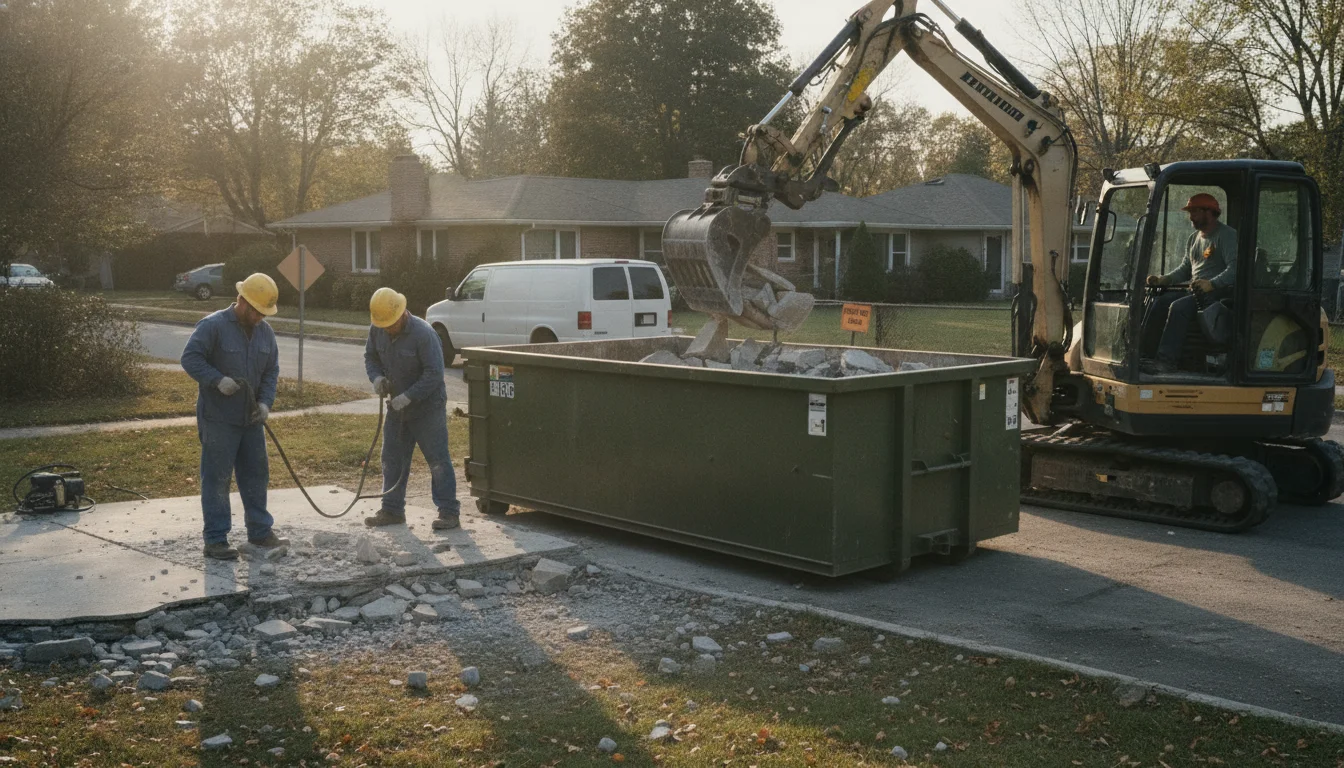
Picture the job done: the patio is broken up, the driveway is in chunks, and the crew is tired. Now comes the hard part—moving all that concrete off-site. If you’re weighing concrete disposal vs dumpster rental, here’s the short answer: disposal service is best for one-time heavy piles with fast haul-away, while a dumpster rental suits longer projects with steady debris and on-site sorting.
1. Concrete Disposal Service: What It Includes and When It Fits
A concrete disposal service sends a truck and crew to load and haul broken slabs, blocks, footers, and curbs. Many providers sort and recycle clean concrete, which means no dirt, trash, or wood mixed in. Rebar is acceptable if it’s cut and safe to handle.
Douglasville Junk Removal works across Douglasville every week to clear heavy debris from tight driveways and busy job sites. Douglasville Junk Removal often pairs this option with Commercial Junk Removal and Construction Debris Removal when the project wraps in a day.
Pros
- Fast removal when the pile is ready
- No space lost to a large bin
- Labor included for loading
Trade-offs
- Must have debris ready at pickup
- Access needed for the truck and crew
Typical fits include small patios, walkways, and sections of driveway. Tight alleys, low wires, or soft ground can limit truck access. Plan staging so the crew can reach the pile safely. As a reference, concrete weighs roughly 4,000 pounds per cubic yard, so safe sizing and clear access help crews work efficiently.
Pricing factors include weight, breaking and sizing, loading time, and disposal fees for concrete or mixed loads. Costs vary by site access, debris type, and local rules in Georgia.
2. Dumpster Rental: How It Works and When It Fits
Dumpster rental places a container on-site for several days. You fill it as work goes on. Sizes vary, and many haulers offer a concrete-only bin with a set weight limit. Clean concrete means no dirt, no trash, and no tile or shingles.
Site setup matters. Place the bin on level ground. Use boards for driveway protection. Street placement may need a city permit. Ask about setbacks from sidewalks, hydrants, and lanes.
Pros for ongoing remodels
- Work at your own pace over days
- Good for phased demo and sorting
- One spot for debris control
Trade-offs
- Space needed for the bin and truck
- Overage fees if you exceed weight limits
Common pitfalls include mixing other debris with concrete, loading above the rail, or placing the bin where the truck cannot pick it up. Read contamination rules before you start.
3. Head-to-Head: Cost, Time, and Logistics
In this concrete disposal vs dumpster rental comparison, think about the full workflow as well as the price tag.
Total cost of ownership
With disposal service, labor and hauling are combined, so you plan a single pickup when the pile is ready. With a dumpster, you manage your own labor and watch weight limits and rental terms. Extra time, extra loads, or contamination can add fees.
Schedule control
Disposal shines when you want same-day or next-day haul-away once demo ends. A dumpster fits longer timelines and staged tear-outs, letting crews fill as they go.
Safety and compliance
Both options should handle recycling when loads are clean. Ask about rebar handling and size limits. Keep walk paths clear, cap rebar, and follow jobsite rules. Clean loads move faster and avoid headaches.
4. Choosing the Right Option for Your Project
Use this quick checklist:
- One big pile ready now? Choose disposal service.
- Phased demo over days? Rent a dumpster.
- Tight site with little space? Disposal pickup.
- Need time to sort debris? Dumpster.
Scenarios
A small patio demo with easy access suits disposal pickup. The crew breaks, stacks, and waves the truck in the same day. A driveway replacement over several days often fits a concrete-only dumpster. It holds steady loads while forms and cuts finish. A full remodel with mixed materials may need two solutions: a concrete-only bin plus Construction Debris Removal for the rest.
What to ask before you book
- Do you recycle clean concrete, and what counts as clean?
- What are weight or size limits and load height rules?
- How do you handle rebar and large chunks?
- What access is needed for trucks or bins?
- What happens if my plan changes mid-project?
Key Takeaways
- Concrete disposal is fast and space-smart for one-time piles.
- Dumpsters fit longer jobs and steady debris over days.
- Clean, sorted loads reduce risk and keep work moving.
- Plan access, permits, and safety before demo starts.
Frequently Asked Questions
Q: How do I know if my concrete counts as “clean” for recycling?
A: Clean concrete means no trash, dirt, turf, wood, tile, or drywall mixed in. Small amounts of rebar are often fine if they are cut flush or removed. Ask the provider for the exact rules and size limits before you start loading.
Q: What if I have both concrete and general remodel debris?
A: Use two streams. Keep a concrete-only load for recycling and a separate plan for mixed debris. Many teams pair a concrete dumpster with Construction Debris Removal or Commercial Junk Removal for the rest. Clear sorting saves time and avoids contamination issues.
Q: Is a dumpster better for DIY projects?
A: It depends on time and space. If you work on weekends and need a place to stage debris, a dumpster helps. If space is tight or you want it gone fast after a demo day, concrete disposal pickup is simpler and reduces site clutter in Douglasville.
Douglasville Junk Removal serves projects across Douglasville and nearby neighborhoods. For heavy items like Appliances or Furniture Removal during a remodel, plan them alongside your concrete plan so crews are not blocked. When you want a trusted local team to handle the heavy lifting and hauling, Contact us.